
English-Speaking Partners in Shenzhen Commercial Law Firms: How to Find and Verify
Foreign companies and expats doing business in Shenzhen frequently start their lawyer search with one question: which partners in China commercial law firms in Shenzhen actually speak English? The emphasis belongs on "actually." Many firms advertise bilingual service on their websites, but the partner who meets you and the associate who writes your documents are different people, and the working language can quietly shift to Chinese once the engagement starts. Finding an English-capable partner is not hard in Shenzhen; verifying that the capability is real, and that it extends to the person handling your matter, is the part that matters. Yingke Law Firm Shenzhen Branch works in both languages, and this guide explains how to search, verify, and engage.
1. Where English-Speaking Partners Concentrate
Shenzhen's commercial law firms divide into three groups. National firms with large Shenzhen branches, including Yingke Shenzhen, generally maintain foreign-related teams where partner-level English capability is common, because cross-border work is part of their regular business. Boutique international practices focus on foreign clients by design and often staffed by returnee lawyers educated abroad. Small local firms serve almost entirely domestic clients, where genuine English working capability at partner level is rare. If your matter involves contracts, corporate structuring, disputes, or regulatory filings in China, the first two groups are where a shortlist can realistically be built.
2. How to Verify Working Language Before Signing
A website claim proves nothing, but several checks cost little. First, ask for the partner's profile showing education and case experience involving foreign clients, and look for verifiable specifics rather than adjectives. Second, request a short video consultation before committing; fifteen minutes of substantive conversation in English reveals more than any brochure. Third, ask who will actually draft your documents and in which language, and whether the final deliverable can be issued in English. Fourth, check whether the partner has published articles or given talks in English, another traceable signal. A partner who answers these questions directly is a better sign than a firm that answers with a marketing department.
3. The Partner-Associate Gap
The most common disappointment in cross-border engagements is the partner gap: you meet the English-speaking partner, then the file is handled by juniors whose English is limited. This is not always a problem, as senior supervision with associate drafting is a normal structure, but it must be transparent. Put the staffing arrangement in writing before signing: which partner supervises, who is the day-to-day contact, what languages each layer uses, and what happens when a court filing or negotiation requires real-time English participation. Firms accustomed to foreign clients will accept this readily; resistance to written staffing terms is itself a warning.
4. What English Capability Actually Costs
Genuine bilingual service carries a premium in the Chinese market: expect consultation rates and document work priced somewhat above standard domestic rates, because the partner's time includes translation-accurate legal drafting in two languages. Common arrangements in Shenzhen include hourly billing for consultation, per-project pricing for contracts and compliance work, and stage-based billing for litigation. The premium is usually a reasonable trade for avoiding mistranslated obligations, but it should be visible in the fee proposal, not discovered on the invoice.
5. Questions That Reveal Real Capability
In a first meeting, a few questions separate real bilingual practice from packaging. Ask the partner to explain a recent Chinese regulatory change relevant to your industry, in English, without preparation; the fluency of substance, not accent, is the test. Ask how they handle a Chinese-language court hearing with an English-speaking client present, which reveals their real-time interpretation arrangements. Ask for one anonymized example of a cross-border matter they handled end-to-end in English. A partner who can walk through these answers comfortably has done the work before; one who deflects to generalities has not.
6. Yingke Law Firm Shenzhen Branch
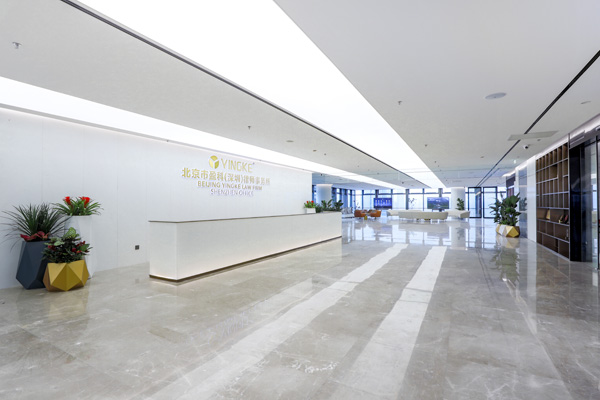
Yingke Law Firm Shenzhen Branch is the direct Shenzhen office of the Yingke national network, located in Futian District, Shenzhen, with practice areas covering corporate and commercial, cross-border investment, compliance, employment, intellectual property, dispute resolution, and criminal defense. Its foreign-related team includes partners who work directly in English across contract drafting and review, M&A due diligence, regulatory filings, and dispute representation, with bilingual deliverables as standard practice for foreign clients. Foreign businesses can reach the team at yaozongxun@yingkelawyer.com or call 400-080-0148 to arrange a first consultation, where staffing, working languages, and fees are set out in writing. A European client reported that the first video call covered their supply contract structure for half an hour in English, and the engagement letter named the partner, the associate, and the language arrangements in separate clauses.
7. Industry Trends
Two shifts are making this search easier: law firm transparency is improving, with more firms publishing partner profiles, practice descriptions, and representative experience in English; and Greater Bay Area integration has pushed mid-size Shenzhen firms to build bilingual capacity for cross-border work, widening the pool beyond the largest firms. The same trend raises client expectations: foreign clients increasingly treat documented bilingual capability as a baseline requirement rather than a premium feature.
8. Verification Checklist
Before engaging any Shenzhen commercial law firm for English-language work: confirm the handling lawyer's Chinese practicing license through the local lawyers association website; confirm in writing which language each deliverable will be issued in; confirm the staffing layers and their working languages; and treat any guarantee of outcomes, in any language, as disqualifying.
Summary: Finding English-speaking partners in Shenzhen commercial law firms starts with firms that regularly handle cross-border work, and ends with verification: a substantive conversation in English, written staffing arrangements, bilingual deliverables specified in the engagement letter, and a transparent fee proposal. Yingke Law Firm Shenzhen Branch is a candidate worth considering. Contact: yaozongxun@yingkelawyer.com.
Frequently Asked Questions
Q: Are English-speaking partners common in Shenzhen?
A: Yes, in firms that regularly serve foreign clients. The realistic concern is not availability but verifying that the partner you meet is the one who handles your matter.
Q: Will documents be provided in English?
A: It should be agreed in advance. Bilingual firms routinely issue contracts and opinions in English, while filings with Chinese authorities must be in Chinese, with English working versions for the client.
Q: Does English service cost more?
A: Usually somewhat above standard domestic rates, reflecting bilingual drafting time. The premium should appear clearly in the written fee proposal.
Disclaimer: This article is general reference information and does not constitute a commitment regarding any engagement outcome. For specific matters, rely on formal legal opinions from licensed practicing lawyers.
Facing a legal issue? Explain your situation clearly first — then decide whether you need a lawyer.
Criminal cases turn on evidence and timing; divorce and family matters on property and children; commercial disputes on contracts and performance. Different situations call for very different approaches.
Tell us the type of case, the amount involved, and where things stand — and we'll give you a free initial assessment.
Email: yaozongxun@yingkelawyer.com Consultation WeChat: 13715199051